Simplest practically buildable oscillator Circuit Diagram The high input impedance and high gain of the FET encourage ease and efficiency in multiple transistorized oscillator circuits. often, the FET can be utilised directly in transistor circuits and needs no unique circuit components. This convenience is vital, particularly in crystal-controlled, RC-tuned, and capacitance-feedback oscillators. This article teaches us methods to use a single CMOS gate to construct basic oscillator circuits, such as the Hartley and Pierce oscillators. Despite using the fewest possible components, these oscillators are capable of producing incredibly steady and dependable frequency outputs. An oscillator is an electronic circuit which generates a repetitive, or periodic, time-varying signal. In the context of MCU Series 1 or Wireless SoC Series 1 devices, this oscillator signal is used to clock execution of instructions and peripherals in the device.

In this post I have explained how to build simple oscillator circuits like the pierce oscillator and hartley oscillator using a single CMOS gate. Both the oscillators are types of oscillators that utilize minimum number of components yet are able to generate very stable and reliable frequency outputs. Osc illator Design Introduction What makes an osc illator? Types of oscillators Fixed frequency or voltage controlled osc illator LC resonator Ring Oscillator Crystal resonator A voltage controlled oscillator or VCO is an electronic oscillator designed for producing oscillation frequency by a controlled input voltage. The frequency of oscillation is varied by the applied controlled voltage. A VCO plays a vital role in communication system, providing a periodic signal required for digital circuit and also a frequency transmission in digital circuit. Their output
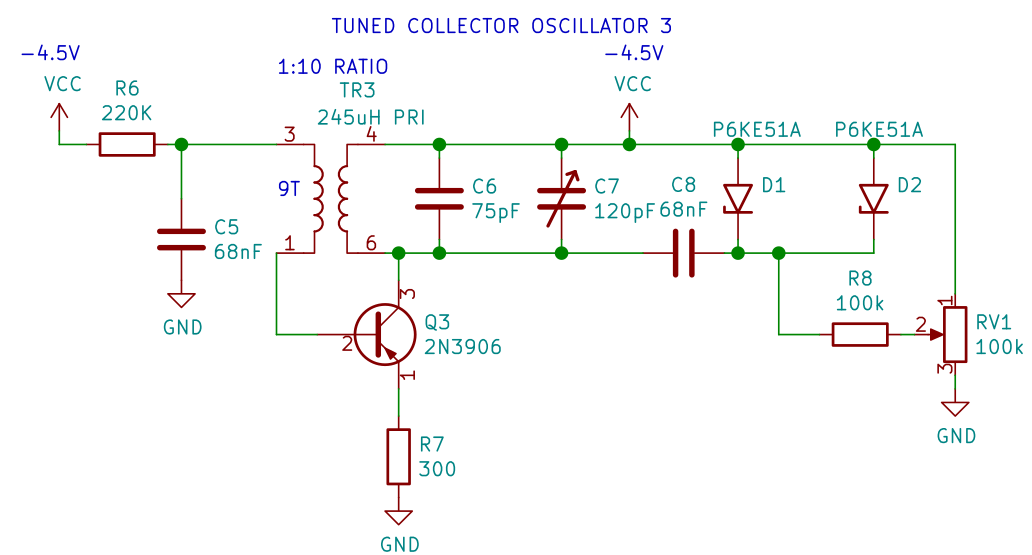
12 Best Oscillator Circuits Explained Circuit Diagram
Explore the fundamentals of Current Controlled Oscillators (CCOs), their working principle, types, applications, design considerations, and more. Introduction to Current Controlled Oscillators A Current Controlled Oscillator (CCO) is an essential component in many electronics applications. It is an oscillator device whose frequency is controlled by an input current. The output frequency of a An Oscillator is basically an Amplifier with "Positive Feedback", or regenerative feedback (in-phase) and one of the many problems in electronic circuit design is stopping amplifiers from oscillating while trying to get oscillators to oscillate.
